

Search results for Deepak Chopra happiness usually mix quotes, slogans, and vague positivity.
Chopra is more specific than that. Across his essays and structured programs, he treats happiness as something deeper than a mood spike or a good week. He draws a line between happiness that depends on circumstances and a more stable inner condition that is less fragile when life changes.
This article maps his core ideas in plain language, then ties them to his current structured framework, the Happiness Prescription and its seven keys.
Chopra core definition: happiness as an inner condition, not a trophy

A repeating idea in Chopra’s work is that lasting happiness is not something you win through perfect outcomes. It is something you uncover or reconnect with internally. In his discussions on happiness and awareness, he explains that real happiness is rooted in Being rather than achievement.
To understand how Chopra defines happiness beyond motivation or positivity, this overview video gives a clear foundation:
🔗 Cultivating Happiness – Deepak Chopra
A practical way to translate his idea into everyday language is:
- Circumstantial happiness is when life is going your way
- Deeper happiness is when your inner baseline stays steadier even when life is messy
Two kinds of happiness: dependent vs liberated
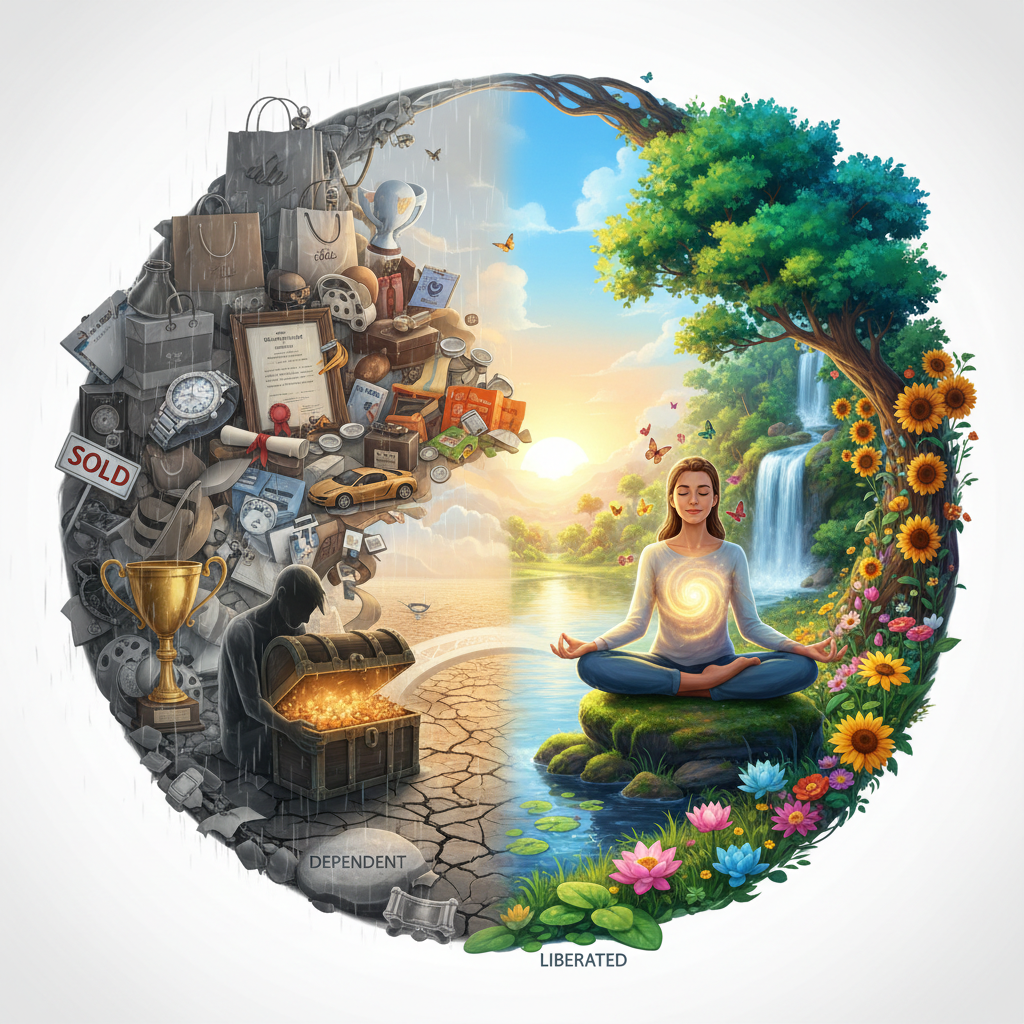
Chopra often separates happiness into two forms: one that rises and falls with outside circumstances, and one that is more liberated from them. This distinction explains why people can appear successful and still feel dissatisfied.
He expands on this difference and why external success alone does not sustain wellbeing in this interview-style explanation:
🔗 The Secret to Happiness With Deepak Chopra, M.D.
In his framing, you do not stop caring about your life. You change what you rely on for emotional stability.
Why desire does not create lasting happiness in his worldview

Chopra does not say desire is evil. He argues that desire becomes a problem when it turns happiness into a moving target. In that pattern, the mind keeps postponing happiness until the next milestone.
This is the logic loop he pushes against:
- I will be happy when I get X
- I got X, now I need Y
- I will be happy when I get Y
In his essay on desire and happiness, he warns that tying happiness to desire produces instability, because desire has no natural finish line.
A grounded interpretation is that desire is useful for direction, but not reliable as a foundation for wellbeing. If you try to build your emotional life on constantly changing goals, you create constant emotional dependence on the future.
The hidden happiness trap: expectations and outcome attachment

One of Deepak Chopra’s clearest practical arguments is about expectations. He frames expectations as a subtle attempt to control the future, which makes happiness conditional. When life fails to match that internal contract, people lose not only peace of mind but also a sense of their own happiness in everyday life.
He repeatedly returns to a stabilizing idea rooted in wisdom: you can control your actions, but not outcomes. This does not mean abandoning goals, success, or hope. It means refusing to tie inner peace and well being to results you cannot fully control. For Chopra, this shift is often the first step on the path toward true happiness and fulfillment.
This idea resonates strongly with modern stress patterns because it applies directly to everyday life:
- relationships: you can control how you listen and communicate, not the other person
- work: you can control effort and clarity, not every decision above you or measures of wealth
- health: you can control habits, not every variable in biology affecting the body, spirit, or soul
The core message is simple but powerful: achieving happiness comes from aligning action with intention, not from forcing outcomes.
This shift aligns naturally with how the Twelve app is designed. The Twelve platform is a social media space focused on wellbeing and personal development, where expert creators share short videos, spark thoughtful discussion, and explore ideas like intention, awareness, and inner stability through community conversation rather than rigid instruction.
Why he critiques modern culture approach to happiness

Chopra is not only talking about personal psychology. He also critiques a cultural model of happiness built on comfort, distraction, and constant consumption.
In his foundation writing, he argues that developed societies often package happiness as entertainment plus consumer goods plus endless stimulation, which can produce personal dissatisfaction and wider social and ecological strain.
Whether a reader agrees or not, this matters for understanding his approach. He is not offering a quick fix. He is challenging the definition of happiness itself. In his view, if the definition is shallow, even successful people can feel empty.
Chopra structured framework: the Happiness Prescription and the 7 Keys

Chopra newer course framework packages his ideas into a stepwise model called the Happiness Prescription. It presents happiness as something cultivated from within and organizes the journey into seven keys.
Here is the list as presented in the program materials:
Key 1: Be aware of your body
This starts with noticing signals, tension, fatigue, and the way emotions show up physically. In plain terms, you cannot steady your inner life if you live disconnected from your body. This key pushes awareness before analysis.
Key 2: Find true self esteem
Chopra distinguishes self esteem anchored to roles, praise, and performance from a steadier sense of worth. The direction here is moving from external validation toward internal grounding.
Key 3: Detoxify your life
In his framing, detox is broader than food. It includes mental inputs, relationships, habits, and environments that create chronic stress or negativity. The goal is reducing what repeatedly pulls you away from inner stability.
🔗 The Ultimate Happiness Prescription – 7 Keys by Deepak Chopra
Key 4: Give up being right
This key targets ego friction. Being right can feel protective, but it can also create conflict, rigidity, and constant tension. Chopra uses this as a lever for peace, connection, and emotional flexibility.
Key 5: Focus on the present
This aligns with his recurring theme that happiness collapses when you live in a future contract. The present focus is not denial of planning. It is training attention to stop living primarily in regret or anticipation.
Key 6: See the world in yourself
This is his more spiritual language, but it can be read practically as dissolving excessive separation. It pushes empathy, interconnectedness, and meaning beyond the isolated self.
Key 7: Live for enlightenment
Enlightenment here is not a flashy claim. It is the direction of growth: living from awareness, compassion, and purpose rather than fear and craving. In Chopra system, this is the horizon that makes happiness durable.
How the seven keys fit together as one model

A simple way to see the sequence is:
- awareness first: body and inner signals
- identity next: self worth that is not fragile
- environment next: reduce repeated destabilizers
- relationships next: soften ego conflict
- attention next: train presence
- meaning next: expand beyond a narrow self
- purpose last: live from higher values consistently
This matters because it prevents readers from cherry picking one idea and missing the deeper structure. Chopra approach is not just motivational. It is a worldview plus a set of repeated levers that aim at inner stability over external control.
That is also where the Twelve app fits naturally into the picture. The Twelve platform gives people a place to explore wellbeing and personal development through short expert-led videos, open discussion, and shared reflection inside focused communities, without turning ideas like happiness into rigid systems or performance goals.
How to read Chopra without turning happiness into pressure?
A common trap is turning happiness into a performance metric. People start monitoring themselves and feeling guilty for feeling bad. Chopra approach is not best used as a mood requirement. It is better used as a long term orientation:
- notice what makes happiness conditional in your mind
- shift from outcome dependence to action focus
- reduce inputs that repeatedly destabilize you
- build inner stability as a baseline, not a perfect mood
That interpretation matches his repeated emphasis on inner grounding, expectations, and identity rather than constant positivity.
For readers who want to explore these ideas at their own pace, the Twelve app offers a social environment where expert creators share perspectives on happiness, awareness, and wellbeing through short videos and community conversation, allowing reflection without pressure or rigid expectations.
FAQs
What does Deepak Chopra mean by happiness as Being?
He means lasting happiness is an inner condition tied to awareness of self, not something you earn through external achievements.
What role do expectations play in unhappiness?
He treats expectations as attempts to control the future, which makes happiness depend on outcomes you cannot fully control.
What are the seven keys to happiness in the Happiness Prescription?
They are: be aware of your body, find true self-esteem, detoxify your life, give up being right, focus on the present, see the world in yourself, live for enlightenment.
How do the 7 Keys support personal transformation and growth?
The 7 Keys focus on personal transformation through meditation, gratitude, spirituality, and good relationships. Drawing from science, medicine, and positive psychology, Chopra presents a new kind of approach to cultivating happiness and personal growth over time.
Does Chopra acknowledge uncertainty in happiness research?
Yes. In his writing about wellbeing and genetics, he explicitly notes limits in proof and frames parts of the discussion as trends rather than absolute truths.
Why is Chopra’s work influential in medicine and public health?
A world renowned pioneer in integrative medicine, Deepak Chopra md trained in family medicine and is a clinical professor and senior scientist. His work across the last thirty years connects public health, anxiety, physical pain, joy, and bliss into a holistic model of healing.
How does Chopra critique modern culture’s idea of happiness?
He argues modern culture often equates happiness with comfort, distraction, and consumer goods, and he questions whether that model is sustainable or fulfilling.
How do Chopra’s books and teachings reach a global audience?
As a york times bestsellers author translated into over forty three languages, including forty three languages worldwide, Chopra’s latest book continues his meditation revolution. Recognized by time magazine and the Gallup organization, his work promotes more happiness, knowledge, and spiritual growth globally.