


If you follow Andrew Huberman’s work closely, the word protocols shows up everywhere. In podcasts, newsletters, and topic guides, he uses it in a very specific way. Not as a buzzword. Not as a rigid checklist. But as a practical framework for applying neuroscience and physiology to everyday life.
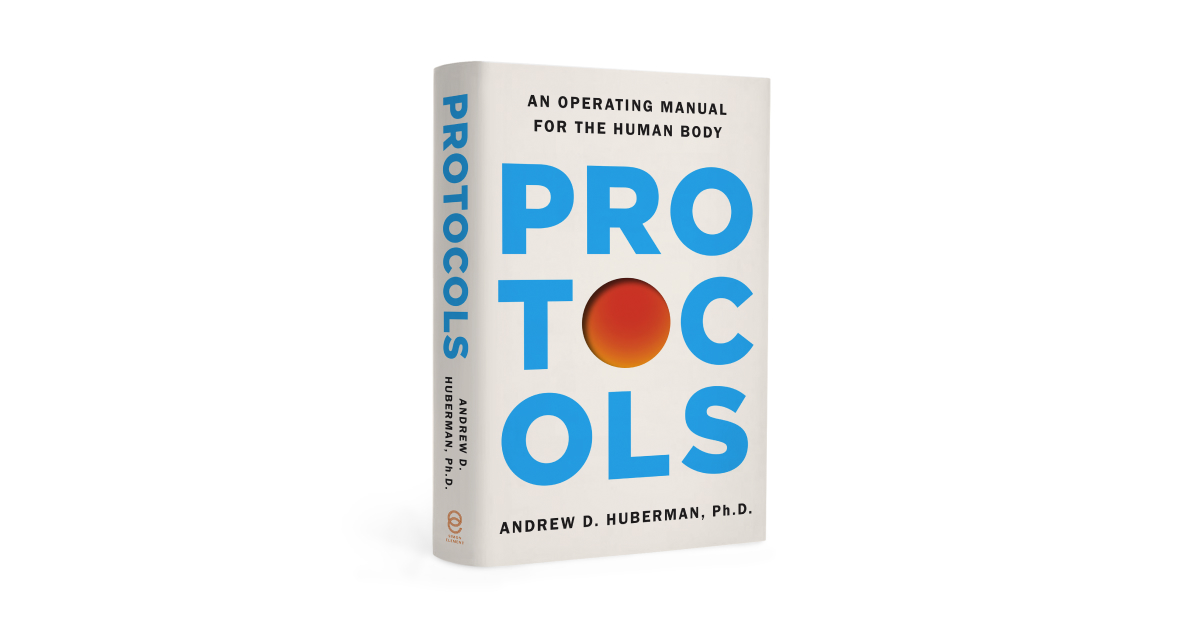
That framing matters, because it is also the foundation of his upcoming book, Protocols: An Operating Manual for the Human Body. And it explains why so many people searching for the book feel confused. The internet tends to flatten his work into lists of rules, while Huberman repeatedly emphasizes hierarchy, personalization, and consistency over perfection.
This article clarifies what Huberman actually means by protocols, what the book is designed to do, and why understanding his priorities matters more than copying any single routine.
Is Protocols out yet? The confirmed release date and why dates vary online
The most common question tied to this book is simple and practical: is it available yet.
The answer is no. The confirmed release date is September 15, 2026.
That date is listed on Huberman Lab’s official FAQ and matches the publisher listing. The confusion comes from older trade announcements and book tracker sites that surfaced earlier projections. Those pages still rank in search results, which creates distrust and unnecessary speculation.
The clean takeaway is straightforward. The book is not out yet, and September 15, 2026 is the date Huberman himself points to publicly.
What Huberman means by protocols: templates, not rigid rules

A core mistake people make when engaging with Huberman’s work is treating protocols as commandments. That is almost the opposite of how he frames them.
In his language, a protocol is a structured way to apply a biological lever toward a specific outcome. Light exposure, sleep timing, temperature, breathing patterns, training variables, stimulant timing. These are levers. A protocol organizes how and when to use them.
Just as important, Huberman repeatedly stresses that protocols are customizable. They are meant to be adapted to goals, constraints, and safety considerations. They are not identity badges. They are not meant to be copied blindly.
For people looking to explore that kind of customization in real life, the Twelve app offers a social media environment focused entirely on self-improvement and longevity. Inside the Twelve platform, users discover short expert-led videos, explore ideas through a focused feed, and engage in conversations with others thinking seriously about applying these frameworks in daily life.
This is why he often describes his tools as operating manuals or toolkits. The goal is not to impose a lifestyle. The goal is to give people a way to reason about cause and effect in their own biology.
What the book is designed to cover
According to Huberman’s own description, the book is meant to serve as a broad operating manual for the human body. It consolidates principles he has already explored across many formats into a single reference.
The domains he consistently mentions include:
- Brain function
- Mood and energy regulation
- Physical performance
- Bodily health
- Behavior change
What matters is not the list itself, but the way he organizes it. Across his work, the same hierarchy shows up again and again.
The Huberman hierarchy: foundations before optimization
If there is one throughline that defines Huberman’s philosophy, it is this: fundamentals come first.
He is explicit about this point, especially when it comes to sleep and supplementation. Before adding devices, pills, or advanced techniques, he insists on stabilizing baseline behaviors.
This hierarchy usually looks like:
- Foundational regulators
- Targeted behavioral tools
- Optional add-ons
Skipping steps tends to increase complexity without increasing results.
Sleep as the primary foundation
Sleep sits at the center of Huberman’s hierarchy. He returns to it constantly, not because it is trendy, but because it regulates nearly every system people want to improve. YouTube reference:
One of his most practical contributions is organizing sleep priorities around QQRT:
- Quantity
- Quality
- Regularity
- Timing
Regularity is the anchor. He emphasizes that consistent sleep and wake times matter more than chasing perfect metrics. In his framing, hitting the fundamentals most nights is enough. Perfection is not required, and chasing it can backfire.
This is also where he introduces a subtle but important warning. Over-fixation on sleep optimization can increase anxiety, a phenomenon often referred to as orthosomnia. In other words, measuring everything can make sleep worse if it increases arousal and stress.
The message is balanced: sleep matters deeply, but it should support life, not dominate it.
Consistency over perfection
Huberman often uses an eighty percent rule when discussing sleep fundamentals. Prioritize getting the basics right most nights, not all nights. Life happens. Travel happens. Stress happens.
This framing matters because it shifts people away from an all-or-nothing mindset. Protocols are meant to be sustainable. They are meant to serve real lives, not replace them.
Supplements as adjuncts, not solutions
Huberman’s stance on supplements is structurally conservative. He does not frame them as shortcuts. He frames them as optional adjuncts that come after foundations are in place.
He is explicit about a hard limit: no supplement can fully compensate for chronic sleep deprivation. That statement appears repeatedly across his topic pages and newsletters.
When he does discuss supplements, several principles recur:
- Behavioral tools come first
- Medical oversight matters
- Single-ingredient testing is preferable to stacked blends
- Avoid daily use of certain compounds to preserve effectiveness
- Personal response matters more than theoretical benefit
This is why his supplementation content often feels cautious compared to influencer culture. He treats supplements as biological inputs with tradeoffs, not lifestyle accessories.
Personalization and the risk of over-optimization

Another consistent theme in Huberman’s work is the danger of over-optimization. More tools do not automatically mean better outcomes.
Tracking, gadgets, and protocols can become sources of stress if they are layered on too early or without clear intent. Huberman frequently warns that complexity should only be added when it serves a defined purpose.
This is where personalization becomes central. He encourages people to think in terms of minimal effective dose. What is the smallest intervention that produces a meaningful benefit for you. YouTube reference:
In practice, that means:
- Adjusting protocols to time constraints
- Respecting individual sensitivity to stimulants, supplements, and stress
- Prioritizing sustainability over intensity
Protocols are not meant to be trophies. They are meant to be tools.
Why the internet often misrepresents Huberman’s protocols?

A lot of protocol lists online flatten nuance. They extract timestamps and present them as universal rules. In doing so, they remove the hierarchy and constraints that Huberman emphasizes most.
This leads to two common confusions.
First, people assume protocols must be followed exactly. Huberman’s own framing rejects that idea. He consistently describes them as modifiable templates.
Second, people assume supplements or gadgets can replace fundamentals. Huberman’s work explicitly argues against that shortcut.
When his protocols are treated as checklists, they feel overwhelming. When they are treated as operating principles with priority order, they become navigable.
This mindset aligns naturally with how the Twelve platform is designed. The Twelve app centers on short-form video content, focused communities, and open discussion, allowing people to explore ideas at their own pace, connect with like-minded users, and engage directly with verified expert creators without turning optimization into pressure.
What readers can reasonably conclude before the book releases

Even without the book in hand, Huberman’s existing work already reveals the structure of the operating manual he is building.
Several conclusions are safe to make.
First, the book is not about extreme optimization. It is about understanding levers and applying them thoughtfully.
Second, the book prioritizes systems-level regulators like sleep and circadian alignment before narrower interventions.
Third, personalization and safety are not side notes. They are central to how he defines evidence-based practice.
Finally, the book’s value lies in consolidation. Huberman’s ideas are already public, but they are scattered. The book aims to bring them into a single, coherent framework.
Reader guidance: how to interpret Huberman’s protocol concept

A helpful way to think about Huberman’s protocols is to see them as decision aids.
Instead of asking, what should I do exactly, the better question is, what lever am I trying to influence, and what is the least disruptive way to influence it.
Several mental models recur across his work.
The protocol ladder:
Foundations first, then targeted tools, then optional add-ons. Skipping rungs rarely pays off.
The eighty percent rule:
Consistency beats perfection. Protocols should fit real life.
The adjunct test:
If something is marketed as compensating for poor sleep or chaotic routines, it likely conflicts with his stated worldview.
The personalization principle:
Protocols are templates. Adaptation is expected, not a failure.
That is also where the Twelve app fits into the picture. The Twelve platform is built as a place to discover self-improvement and longevity content through short videos, join topic-based communities, and connect directly with expert creators and others on a similar path.
Where readers often want to go next
Once people understand Huberman’s framework, they usually want depth, context, and continuity. Not another isolated clip, but a way to follow expert thinking over time and ask better questions.
That is where a creator-synthesis approach becomes useful. Instead of chasing fragmented advice across platforms, readers benefit from seeing how a creator’s ideas connect across topics, constraints, and updates.
FAQ: common questions about Andrew Huberman’s Protocols book and philosophy
Is Andrew Huberman’s Protocols book already available?
No. The confirmed release date is September 15, 2026. Earlier dates circulating online come from outdated listings.
What is the book designed to help with?
The book aims to serve as an operating manual for brain function, mood and energy, physical performance, bodily health, and behavior change.
What does Andrew Huberman mean by protocols and why do they matter?
Andrew Huberman is a neuroscientist and tenured professor at Stanford School of Medicine who introduces protocols based on scientific principles. Huberman explains them as evidence based solutions for optimizing bodily health, physical health, and mental health through the nervous system.
How does Huberman define protocols in practice?
Protocols are evidence-based, customizable templates for applying biological levers. They are not rigid rules and are meant to be adapted.
What fundamentals does Huberman insist come first?
Sleep regularity, circadian alignment, environment, and basic exercise habits are prioritized before supplements or advanced optimization tools.
What does Protocols: An Operating Manual for the Human Body actually promise?
The book is an essential guide and essential road map for achieving optimal health and physical performance. In a clear and engaging style, author Andrew Huberman explains the scientific principles behind each protocol for improving brain function and enhancing mood and energy.
What does Huberman warn about regarding supplements?
He frames supplements as adjuncts, not replacements for lifestyle foundations, and stresses medical oversight and personalization.
How does Huberman’s research support mental and physical health?
As a tenured professor at Stanford School, his published work in top journals draws on behavioral sciences and medicine. The focus includes rewiring your nervous system, brain development, and improving brain function enhancing mood for effective results.
Does Huberman believe supplements can compensate for poor sleep?
No. He explicitly states that no supplement can fully compensate for chronic sleep deprivation.
How does Huberman approach personalization?
He encourages minimal effective doses, single-variable testing where possible, and adapting protocols to individual constraints and safety needs.
Why has Huberman’s work gained attention from media and public health audiences?
Huberman launched the world’s leading health podcast, making research accessible in an engaging style. Recognition from top media outlets, scientific American, and honors like ophthalmology’s cogan award, pew foundation fellow, and Mcknight foundation support reflect significant discoveries.
Conclusion: an operating manual, not a rulebook
Andrew Huberman’s work is often misunderstood because it is reduced to lists. But his real contribution is not the list. It is the structure behind it.
Protocols, in his framing, are tools for thinking clearly about biology. They prioritize foundations, respect constraints, and reward consistency. The book is best understood not as a collection of hacks, but as a map for applying evidence without losing judgment.
For readers willing to engage with that mindset, the confusion fades. What remains is a practical way to decide what matters, what can wait, and what should be adapted to fit the realities of a human life.