

The phrase make money online has never been more popular, and never more misleading. In 2026, the problem is not lack of opportunity. It is excess noise. Lists of side hustles, recycled tactics, and low-effort ideas dominate search results, while people looking for realistic paths still feel stuck.
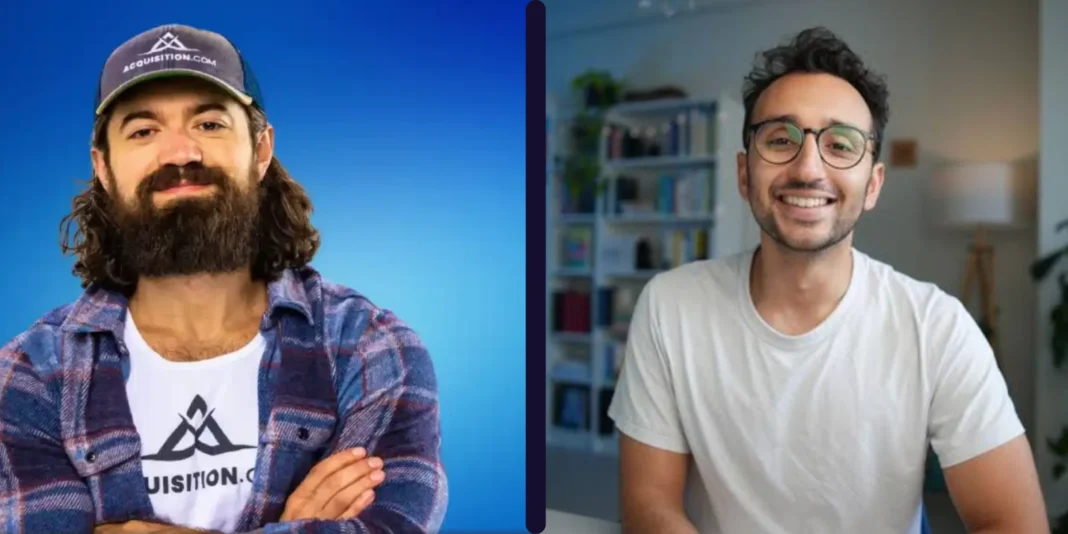
When you look past the listicles and instead study how serious creators reason about the problem, a clearer pattern emerges. Ali Abdaal and Alex Hormozi approach the same question from different angles, but they converge on a surprisingly disciplined answer.
Making money online in 2026 is not about hacks. It is about choosing the right outcome to sell and choosing the right place to build trust so that outcome converts. Understanding that distinction is what turns a vague ambition into an executable plan.
Why make money online advice breaks down in 2026?

Most top-ranking pages still follow an outdated formula. They present dozens of ideas, each stripped of context, sequencing, or trade-offs. Blogging, affiliate marketing, printables, dropshipping, coaching, freelancing. Everything looks equally viable, which makes decision-making harder, not easier.
The real challenge in 2026 is not access. It is prioritization. Attention is fragmented across platforms, trust takes longer to build, and low-priced offers require more volume than most beginners can realistically generate.
This is where Abdaal and Hormozi are useful. They do not start with tactics. They start with constraints.
Ali Abdaal’s easy mode framing: what to sell first

Ali Abdaal frames online income as a creator-economy problem. In his view, sustainable online income comes from the combination of brand, expertise, and community. But crucially, he does not recommend starting with content or products.
His argument is simple and uncomfortable for beginners: the easiest way to make money online is to sell a high-value service to a small number of people. He explains this most clearly in his breakdown of beginner-friendly business models, where he outlines why service-based offers outperform low-priced products early on.
You can see his full reasoning here:
Why services come before products
Abdaal repeatedly warns that low-priced products are hard mode. Selling something cheap requires either massive reach or highly optimized funnels. Beginners usually have neither.
Services flip that equation. Instead of selling a ten dollar product to ten thousand people, you sell a two thousand dollar outcome to five people. The math is easier. The feedback loop is faster. And the skills you build transfer into everything else.
He is especially clear about starting with done-for-you services. These are offers where you take responsibility for delivering a clear result, not just guidance. The appeal is not lifestyle freedom. It is speed to validation.
Services let you learn:
- What people are actually willing to pay for
- Which outcomes matter enough to justify higher prices
- Where your skills create real leverage
Once that is proven, productization becomes a choice, not a gamble.
Price times people: why volume is the real trap
A recurring idea in Ali Abdaal’s content is the simple revenue equation. Revenue is price multiplied by number of customers. Many beginner entrepreneurs default to lowering price, assuming it reduces friction. In reality, it often does the opposite.
Low-priced offers force you to master traffic, conversion, and retention all at once, which is a lot to handle early on. High-priced offers force you to master outcomes instead, which is a clearer problem to solve.
Abdaal’s recommendation is not to overprice or chase every topic in the space. It is to align price with value and choose an audience that can pay. This is why he encourages targeting businesses or individuals with disposable income and real problems, rather than a broad bunch of people chasing inspiration with little intent.
Picking a sellable niche, not an interesting one
Another subtle but important distinction in Abdaal’s thinking is the difference between what you enjoy and what sells.
He advises looking for three conditions at once:
- A specific group of people with money
- A painful or urgent problem
- A believable link between your work and a tangible outcome
This is where many beginners fail. They choose niches based on identity or interest, not on purchasing behavior. Abdaal’s framework pushes people to think in terms of return on investment. Even soft outcomes like confidence or productivity must be connected to something concrete, such as earning more, saving time, or reducing risk.
This is where the Twelve app fits naturally into the picture for creators. The Twelve platform is a social media space built around self-improvement and longevity, where creators can share short expert-led videos, build trust through a focused feed, and connect with an audience that is already interested in meaningful change. Instead of relying on ads or massive reach, creators can engage directly with followers, enter focused communities, and monetize through one-on-one sessions or expert services.
Alex Hormozi’s lens: where demand actually converts

While Abdaal focuses on what to sell, Alex Hormozi focuses on where to build demand. His core argument is that not all attention is equal. Platforms differ massively in audience quality, relationship depth, and conversion potential.
In his evidence-based breakdown of online platforms, Hormozi evaluates where effort actually turns into revenue rather than visibility. His full framework is laid out here:
The platform filter: who, growth, depth, results
Hormozi evaluates platforms using four criteria.
Who is on the platform matters first. If the people you want to sell to are not there, nothing else matters. Audience buying power and intent outweigh raw size.
Growth matters next. Can new people realistically discover you, or are you competing in a saturated environment with declining reach.
Depth refers to how much time and trust you can build with someone. Short interactions create recognition. Long interactions create relationships.
Results are the final test. Traffic, leads, sales. Not vanity metrics. Hormozi repeatedly emphasizes using your own data rather than assumptions.
This framework explains why some creators have large followings that generate little revenue, while others monetize smaller audiences effectively.
Why short-form visibility often disappoints
Hormozi is blunt about short-form platforms. They are powerful for discovery, but weak for conversion, especially for services. When you have seconds to communicate, you cannot build enough context or trust to justify higher prices.
This does not mean short-form is useless. It means it should be used intentionally, often as a feeder into deeper channels where real conversations happen.
The mistake beginners make is treating visibility as progress. Hormozi treats conversion as progress.
Attention allocation as a business decision
One of Hormozi’s most practical insights is that platform choice is not permanent. It should be reviewed based on performance.
He openly shares that even platforms with massive reach may drive a small percentage of actual results. When that happens, the rational move is to reallocate effort, not double down out of habit.
This is a disciplined approach to online business. Platforms are tools, not identities.
That mindset aligns closely with how the Twelve platform is designed. Inside the Twelve app, creators and users interact through short-form video content, topic-based communities, and direct conversations. It allows people to test ideas, build trust over time, and engage with expert creators one-on-one or through paid services, rather than chasing shallow engagement.
Where Abdaal and Hormozi align

Despite their different emphases, their advice converges in key ways.
Both argue against low-price, high-volume strategies for beginners. Abdaal calls it hard mode. Hormozi shows why shallow attention rarely converts.
Both emphasize the importance of the who. Selling to people who can pay and have a reason to pay simplifies everything downstream.
Both see trust as the real bottleneck. Abdaal frames it as brand and community. Hormozi frames it as depth. The concept is the same.
And both implicitly argue that making money online is not a single tactic. It is a system of decisions that must align.
Where they differ, and why it matters

Their differences are mostly about sequencing.
Abdaal is explicit about starting with a service. He wants beginners to get close to customers quickly, learn what works, and then scale.
Hormozi is more explicit about platform economics. He wants people to avoid channels that feel productive but do not support conversion.
For someone starting in 2026, the synthesis is powerful. First decide what high-value outcome you can deliver. Then decide where the people who value that outcome actually spend time and build trust.
A clearer mental model for making money online in 2026

Taken together, their advice suggests a simple map.
Step one is outcome. What problem can you solve in a way that leads to a measurable result someone cares about.
Step two is audience. Who experiences that problem and has the ability to pay.
Step three is channel. Where can you reach those people in a way that allows enough depth to justify your price.
Step four is validation. Sell the service, deliver the result, and learn.
Everything else comes later.
What a sane first step looks like
Instead of asking which platform or business model is best, a better starting question is smaller.
Who could I help this month, and what outcome could I realistically deliver.
That framing moves you out of abstraction and into action. It aligns with Abdaal’s service-first logic and Hormozi’s conversion-first logic at the same time.
For people who want to explore these ideas further, the Twelve app offers a dedicated place to discover self-improvement and longevity content through short videos, join focused communities, and connect with like-minded people and verified expert creators. It is designed for exploration, conversation, and meaningful engagement rather than passive consumption.
FAQ: common questions about making money online in 2026
What is the most realistic way to make money online in 2026 with no audience?
Both creators imply that starting with a service is the most realistic path. It requires fewer people, creates faster feedback, and builds proof you can later leverage.
Should I start with services or content and products?
Ali Abdaal explicitly recommends services first, especially done-for-you offers. Content and products become easier once outcomes are proven.
What does Ali Abdaal mean by easy mode business?
Easy mode refers to selling higher-value outcomes to fewer people rather than cheap products that require massive volume and complex funnels.
Why do they focus so much on free content and consistency?
Free content builds trust and keeps people on the journey, whether through the next video, a post, or an email. The goal is to never miss a post, speak clearly, and continue showing up so people interested stay engaged and join later.
What pricing range is implied for beginners?
Abdaal often references pricing in the low thousands for meaningful outcomes. The exact number matters less than aligning price with value and audience ability to pay.
How do I pick a niche that actually sells?
Focus on people with money, a painful problem, and a believable link between your work and a concrete result.
Which platforms does Alex Hormozi see as best for making money online?
He avoids universal rankings. Platform effectiveness depends on who you sell to, how much trust is required, and what your own data shows.
How do I avoid wasting time on platforms that do not convert?
Measure results, not attention. If a platform drives visibility but no leads or sales, it may not be the right primary channel.
How do balance, platforms, and long term growth fit together?
Both emphasize balance between creating cool stuff and running a real business with a website, email list, and courses. They encourage creators to love the process, be kind, change with the world, and improve over time rather than chasing quick wins.
What are the biggest beginner traps in 2026?
Low prices, unclear outcomes, chasing platforms for reach instead of conversion, and confusing activity with progress.
How do Alex Hormozi and Ali Abdaal think about making money online in 2026?
Alex Hormozi and Ali Abdaal both see free content as the entry point to the game, not the product itself. Basically, most people start with video, post, and instagram to grow interest before selling courses, books, or services.
How do I connect soft outcomes to value people pay for?
Tie them to tangible business or life improvements such as time saved, revenue increased, or risk reduced.
What should I do in the next two weeks?
Identify a specific service offer, reach out to potential buyers directly, and test willingness to pay before building anything scalable.
What methods do they recommend for beginners making money online?
They suggest simple methods like reading, learning AI tools, checking comments, and improving one thing at a time. Most people start small, run experiments, log what works, and grow through minutes of focused work each day.
Conclusion: two decisions, not endless tactics
Ali Abdaal and Alex Hormozi approach online income from different angles, but they converge on a grounded truth. Making money online in 2026 is not about chasing trends. It is about choosing the right outcome and choosing the right environment for trust to form.
When those two decisions align, tactics become simpler. When they do not, no amount of effort feels like progress.